Starting a watch brand in 2026 is very different from what it was even five years ago. Traditional craftsmanship still matters, but today the speed, efficiency, and smart use of technology also play an important role.
Thanks to AI tools, flexible manufacturing, and global e-commerce, independent founders and micro-brands can now compete with established players — without massive upfront investment.
Below, we break down how modern watch brands are built in 2026 — step by step.
1. Is It Still Worth Starting a Watch Brand in 2026?
Yes — but only if you understand one key shift:
Execution is everything.
Consumers are no longer impressed only by generic designs or vague brand stories. Successful new watch brands today focus on:
AI and modern manufacturing make this possible — but only when used correctly.
2. How AI Is Changing the Way Watch Brands Are Built
AI is no longer a novelty tool. In 2026, it is part of the default workflow for competitive startups.
AI dramatically lowers the barrier to entry by reducing design costs, shortening development cycles, and improving decision-making.
2.1 AI-Driven Watch Design & Prototyping
Gone are the days when you needed to spend thousands of dollars on professional renders just to validate an idea.
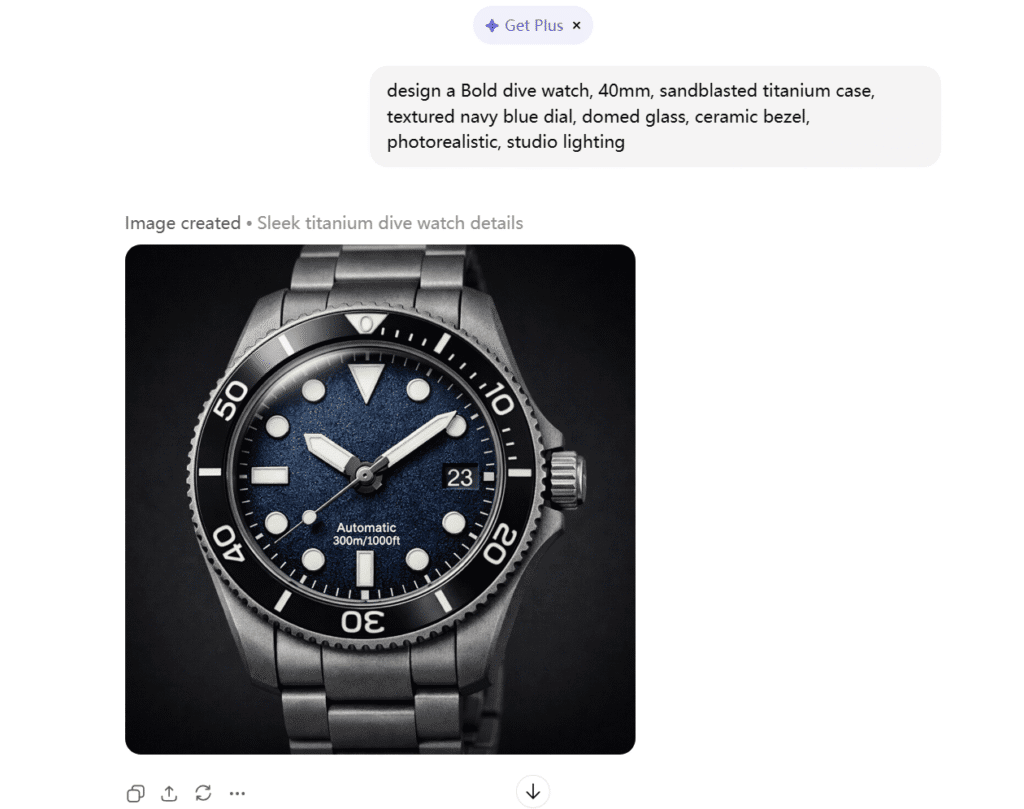
Concept Generation Tools like Midjourney or DALL·E allow you to quickly visualize:
Dial layouts
Case shapes
Material finishes
Example prompt:
“Bold dive watch, 40mm, sandblasted titanium case, textured navy blue dial, domed glass, ceramic bezel, photorealistic, studio lighting”
These visuals help you validate direction before any money is spent on tooling.
From Sketch to Manufacturable Design AI images are only a starting point. Manufacturers require structured information such as:
Case diameter & thickness range
Lug width and construction logic
Dial manufacturing method
Movement compatibility (NH35, Miyota, Sellita, etc.)
At Ops Watches, we help clients convert AI concepts into production-ready specifications, ensuring the design can actually be manufactured — not just imagined.
3. AI-Powered Market Research & Competitor Analysis
Traditional market research is slow and fragmented. AI enables founders to listen at scale.
Instead of manually browsing forums, you can use tools like ChatGPT or Perplexity AI to:
Identify real customer pain points Example query: “Summarize the top complaints about micro-brand dive watches under $500.”
Analyze design trends Combine AI analysis with auction and resale data to see which vintage aesthetics are returning.
Validate pricing expectations Understand what customers expect at each price tier.
Important: AI provides data — but human judgment turns insights into winning products.
4. Marketing in 2026: The Rise of the Content Factory
Content remains the most powerful growth lever for new watch brands, but AI changes how it is produced.
4.1 Visual Content Without Photoshoots
AI tools such as Canva Magic Studio or Adobe Firefly allow you to:
Place your watch design into lifestyle scenes
Create campaign visuals without physical samples
This saves both time and capital in the early stages.
4.2 Social Media Automation
AI video tools can turn your design process into:
TikTok clips
Instagram Reels
Short-form ads
However, brands that rely purely on AI-generated content often sound generic.
Use AI for speed — and human creativity for differentiation.
4.3 SEO & Product Copywriting
AI can help draft optimized product descriptions targeting keywords like:
Best automatic field watch 2026
Affordable luxury watches
Final editing should always be done by humans to maintain authenticity and brand voice.
5. Small MOQ: The New Default for Watch Startups
Large inventory used to be the biggest barrier to entry.
Why Small MOQ Matters
Lower upfront investment
Reduced inventory risk
Faster market feedback
When combined with AI-driven design, small MOQ allows brands to:
Test multiple concepts
Launch limited editions
Iterate based on real sales data
This approach is especially effective for:
Micro-brands
Kickstarter-style launches
Direct-to-consumer brands
6. How Much Does It Cost to Start a Watch Brand in 2026?
While costs vary by complexity, a modern startup budget typically looks like this:
Small-batch production: depends on MOQ and materials
Branding & marketing tools: flexible, scalable
7. Why Manufacturing Partners Matter More Than Ever
AI can generate designs in seconds — but it cannot solve engineering constraints or production realities.
In 2026, the most successful watch startups choose manufacturing partners who can:
Interpret AI concepts accurately
Suggest cost-saving alternatives
Support small MOQ production
Scale smoothly as the brand grows
In a world where ideas are abundant, execution capability is the real competitive advantage.
8. From Idea to Market: A Modern Watch Brand Workflow
Concept & positioning
AI-assisted design exploration
Feasibility review with manufacturer
Prototyping
MOQ production
Content-driven marketing
Scale based on real demand
This lean approach minimizes risk while maximizing learning speed.
Ops Watches
If you are planning to launch your own watch brand, focus less on perfection — and more on execution.
Ops Watches supports independent brands with AI-ready design translation, custom watch manufacturing, and scalable production solutions. If you already have a concept or AI-generated design, we can help you evaluate feasibility and next steps.